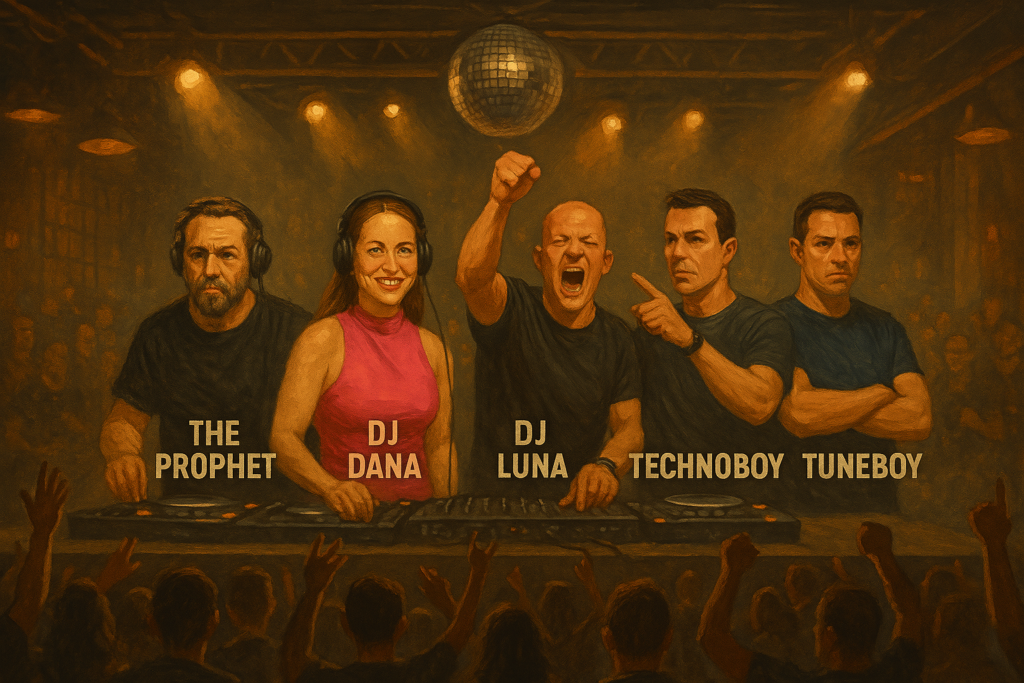
In the late 90s, DJs and producers in the Netherlands and Italy began crafting a new kind of sound — one that was both danceable and aggressive. They pulled inspiration from the pounding intensity of Hardcore Techno, the emotional build-ups of Hard Trance, the distorted kick drums of Gabber, and the psychedelic textures of Acid House. Pioneers like Dana, Luna, and The Prophet, many with Hardcore roots, began slowing the tempo from 180 to around 150 BPM, sculpting a style that retained its raw power but introduced melody and groove.
One of the defining innovations of early Hardstyle was the reverse bass — a technique where the bassline was flipped in timing, creating a distinctive “galloping” rhythm. Instead of just following the kick, it pushed against it, making the music feel like it bounced and surged forward. This rhythm became the heartbeat of the early scene, driving movement and giving Hardstyle its signature bounce energy.
Fun Fact: Hardstyle wasn’t coined its name until 2001, and for a bit DJs didnt know what to call it they called it “harder than hard trance”.
At the heart of Hardstyle is the kick — not just a beat, but a force. Early Hardstyle introduced the now-iconic reverse bass, a rhythm technique where the bassline fires before the kick, creating a bouncing, galloping energy that made dance floors erupt. These early kicks felt alive, like a steady war drum leading you into the drop.
As the genre evolved, the kicks grew heavier, sharper, and more layered — leading to the rise of Rawstyle. These modern kicks are sculpted with distortion and pitch variations, sounding less like drums and more like explosions.
But Hardstyle isn’t just aggression. It carries melodic emotion, often with trance-inspired intros, cinematic build-ups, and euphoric breakdowns that contrast the brutality of the drop. Each track follows a ritualistic structure — rise, fall, climax — taking listeners on a journey of tension and release.
Break Down The Sound
What began in smoky clubs across the Netherlands and Italy has erupted into a global force. Today, Hardstyle commands the stages of massive festivals like Defqon.1, Qlimax, Reverze, and Tomorrowland — drawing tens of thousands of fans united by bass, energy, and neon lights.
Over time, the genre splintered into substyles — Rawstyle, Euphoric, and Psystyle — each with its own flavor, but all pulsing with the same DNA: emotion meets impact.
Artists like Headhunterz, Warface, Sub Zero Project, Da Tweekaz, and Tevvez now carry the torch, pushing the boundaries of what Hardstyle sounds like — and where it can take us. The kicks are harder. The melodies deeper. The crowds louder.
Hardstyle isn’t underground anymore. It’s worldwide.